The Calorie Cost of the Thermic Effect of Food Is
Two foods can contain the exact same number of calories but due to ease of digestion and absorption still result in very different amounts of calories digested and kept by the body at the end of the day. If you consume 2000 calories per day your body will burn around 200 of those calories digesting food.

Pdf The Thermic Effect Of Food A Review
To put it more simply eating and digestion and metabolism burn calories.
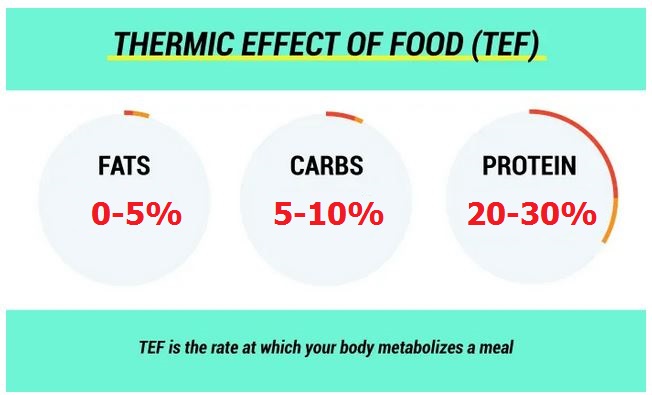
. It should be noted that this energy cost is probably more related to the cost of storage than to the cost of processing and absorption although there are probably other components as well. The thermic effect is scientifically called specific dynamic action. This preview shows page 1 - 2 out of 4 pages.
Foods that require a lot of energy to digest and dont release a lot of energy in digestion are called thermic foods or negative calorie foods. 3 on a question The calorie cost of the thermic effect of food is of the energy consumed. While this concept is popular in dieting guides there is no.
The calorie cost of the thermic effect of food is ___ of energy consumed. Now add that to your calorie total. The calorie cost of the thermic effect of food is of the energy consumed.
The TEF of food accounts for 10 of your total calorie intake. The thermic effect of food is an important consideration if youre looking to increase your bodys metabolism and thats because eating the right kind of food in particular more protein and fiber-rich foods will help to boost your bodys basal metabolic rate. The thermic effect of food actually has another component.
The thermic effect is highest in lean sources of protein where 20-30 of total calories go to processing it. 20 to 25 Feedback The correct answer is. A negative calorie food is a food that requires more food energy to be digested than it provides.
On the other hand food choices can influence that caloric balance by influencing metabolic rate the thermic effect of food TEF and satiety. That is its thermic effect the caloric cost of digesting the food is greater than its food energy content. The second highest TEF is complex carbs 5-15.
Those calories are the thermic effect of. Maybe a calorie is a calorie doesnt hold up after all. The kcalorie cost of the thermic effect of food is __ of energy consumed 1 to 2 5 to 10 15 to 20 20 to 25 Plant proteins do not match our needs for essential amino acids and therefore are called proteins.
1 to 2 b. If you consume 2000 calories over the course of the day about 10 percent or about 200 calories will be expended on digesting absorbing metabolizing and eliminating that food. Sources from Wikipedia states.
Youd be left with a net 70-80 calories. 15 to 20 d. Quiz 8 Study guide The calorie cost of the thermic effect of food is ___ of energy consumed.
Question 2 The 3500-kilocalorie rule which assumes a negative energy balance of 500 kcal per day will lead to 1 pound of. 5 to 10 Correct c. Foods That Cause You to Lose Weight.
The thermic effect of food helps explain why some calories arent quite equal. The correct answer is - B The Kcalorie cost of the thermic effect of food is 5-1 View the full answer Transcribed image text. The thermic effect of food TEF is the energy cost in calories or as a percent of total calories associated with eating digesting processing storing and using its nutrients.
Lean Meat Duck Pork Red Meat Chicken And Turkey Lean meat has a high thermic effect which can be associated with the high costs of peptide bond synthesis bonds that hold amino acids together and costs of gluconeogenesis formation of glucose from non-carb starting materials and ureogenesis formation of urea. No food is actually a negative calorie food but foods that dont have many calories can still require energy to digest potentially resulting in a net loss of calories. In order for one to lose weight and hence body fat ones caloric expenditure must exceed their caloric intake and this requires energy intake control and thus the quantity of food must be controlled 1.
Thermic Effect of Food 2400 calories x 015 360 calories per day. The thing is some foods cost more calories to burn than others. This is also why as a general rule its recommended.
The Negative Calorie Effect. Thus if you eat 100 calories from protein your body uses 20-30 of those calories to digest and absorb the protein. Pure carbohydrate would leave you with a net 90-95 calories and fat would give you a net 97-100 calories.
The calorie cost of the thermic effect of food is_____ of energy consumed 5-10 ________ increases energy expenditure above basal energy needs by about 25 to 40.
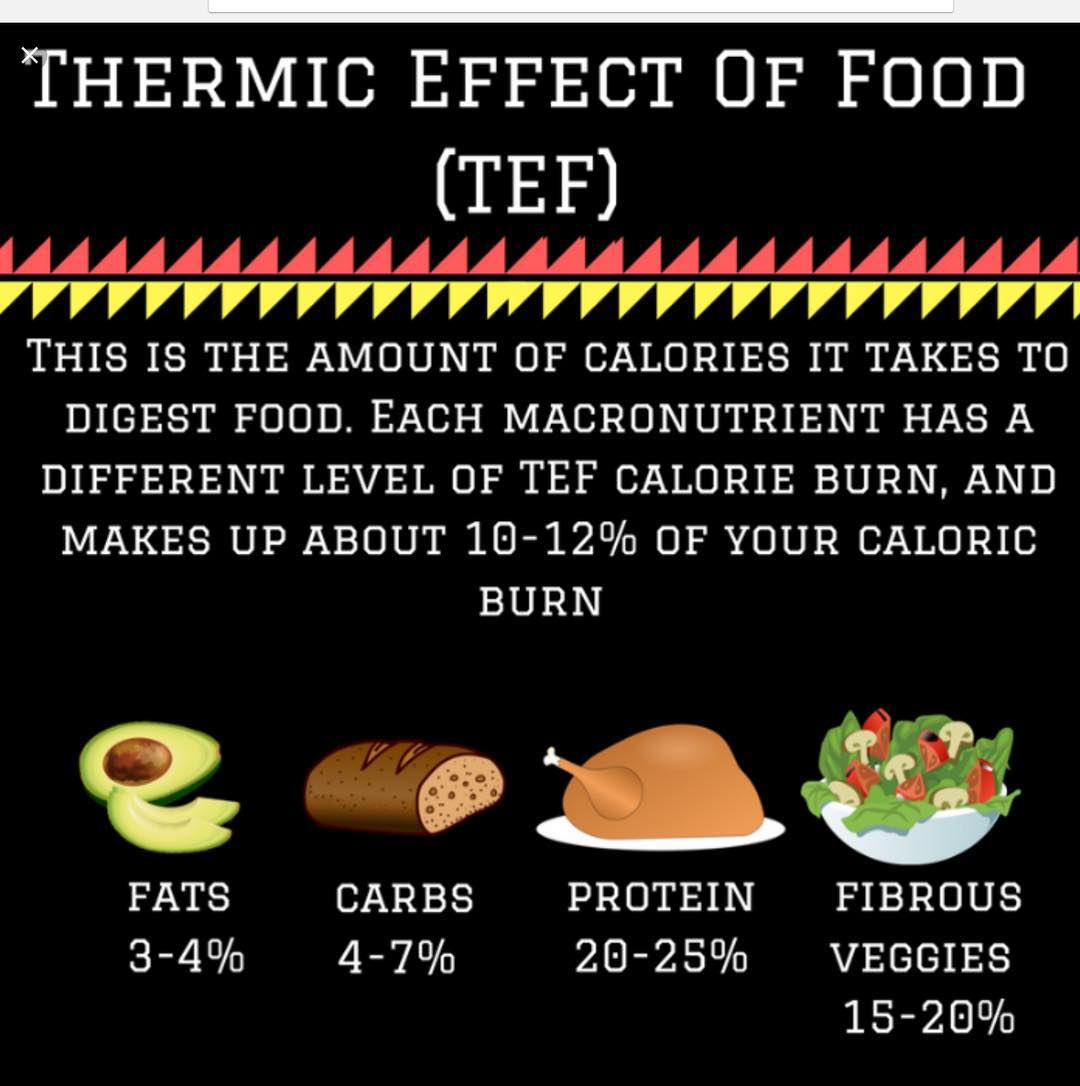
Dave Saxton Pt The Thermic Effect Of Food Tef Is The Amount Of Energy Required To Digest And Process The Food You Eat It S Also Referred To As Specific Dynamic Action

Is A Calorie Just A Calorie Thermic Effect Of Food
The Thermic Effect Of Food Tef Bodybuilding Wizard
Comments
Post a Comment